The hidden cost of bad payment terms and how to fix them
Cashflow, not competition, kills most small businesses. In the UK, 62% of small businesses are owed money from unpaid invoices, with an average of...

Set up your first scheme, cut operational risk and keep your equity setup working as you scale.
CFO / FDStay audit-ready at every stageBoard-ready equity governance and reporting, with deed / witness signatures and custom document templates.
HR / People leadTurn equity into retentionMake equity visible to employees and turn it into a real retention lever.
InvestorAccess private markets with confidenceSPVs, PISCES and private-markets access, with data rooms and deal track records.
Founders, finance and people teams all rely on the same equity record - we just give each of them the view they need.
Watch a demoA short walkthrough, end to end.
Migrate to VestdDigitise or move your existing scheme
EMI, growth shares, CSOP & more
ValuationsUK HMRC & US 409A valuations
Equity management & adminGovernance, admin & filings
Fundraising - InVestd RaiseApply for S/EIS & structure your round
PISCES / secondary marketsDeploy into regulated secondary trading
Fundraising, share schemes & incorporation
For scaleups & SMEsBuild and retain a winning team
For larger companiesStreamline equity management
Incentives are supposed to inspire performance, but in reality, many companies find the opposite.
Without careful planning, incentives can drive short-termism, unhealthy competition, and behaviours that run counter to strategy.
The uncomfortable truth? A badly thought-out incentive plan can undermine culture, productivity, and progress.
In this article, we’ll cover the red flags that show your incentive plan isn’t working as planned, and share some practical steps to realign incentives without losing trust
Most leaders don’t spot incentive problems until the damage shows up in performance reviews or exit interviews.
This is too late, so it’s vital to look out for some common warning signs:
If behaviour looks busy but undermines long-term goals, your incentives are working against you.
A healthy incentive system follows a simple pattern, wherein strategy drives desired behaviour, which is then reinforced through rewards.
Where it often breaks down:
McKinsey found that only 52% of executives think their incentive programmes align with company goals, and just 32% believe they drive the right behaviours .
If strategy and rewards aren’t connected, you’ll fuel the wrong behaviours.

Too many leaders bolt on incentives as a quick fix to hit targets, but incentives should be an add-on.
Instead, incentives should become a core part of how your company defines success.
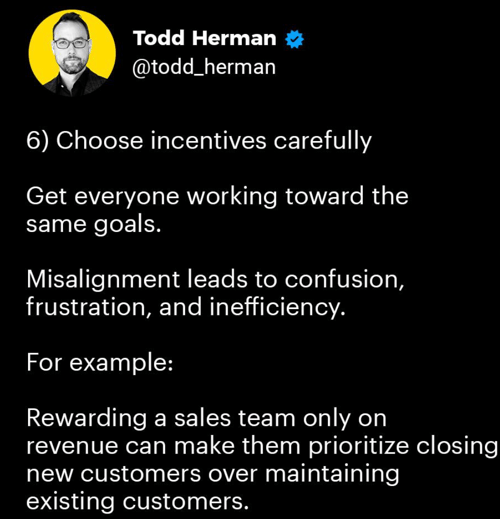
When incentives aren’t integrated, contradictions emerge. The CEO says long-term growth is the priority, but sales staff are rewarded for short-term volume.
Values posters praise collaboration, but bonuses go only to individuals.
By contrast, integrated incentives create a reinforcing loop in which strategy informs incentives, incentives drive behaviours, and behaviours deliver strategy.
Treat incentives as part of your operating system, not as a side project.
If incentives aren’t working as intended, then it’s time to make a few changes.
Many companies have torn up their old incentive playbooks and rebuilt them around outcomes that matter.
Their results prove that when incentives are redesigned with strategy in mind, culture and performance both improve.
Here are some examples:
Most traditional incentives focus on the next quarter. Share schemes, by contrast, create alignment for the long haul.
Here’s why they’re powerful:
Employee share schemes align incentives with strategy better than almost any other tool, making them a cornerstone of modern incentive design.
Incentives shape behaviour whether you intend them to or not. Poorly designed plans breed short-termism and dysfunction. Well-designed ones act as a force multiplier for culture and strategy.
The most effective incentives aren’t quick fixes. They’re long-term levers. And employee share schemes are one of the best tools for aligning growth, motivation, and loyalty.
If you’re rethinking how to use incentives to power your business, Vestd can help. We specialise in employee share schemes that align founders, leaders, and teams for the long run. Book a call to find out more here.
Cashflow, not competition, kills most small businesses. In the UK, 62% of small businesses are owed money from unpaid invoices, with an average of...
Silos aren’t just a structural problem. You can redraw the org chart, shuffle reporting lines, or create new cross-functional roles, but if your...
Most founders know the LTV:CAC ratio in theory: It compares the lifetime value of a customer (LTV) with the cost to acquire that customer (CAC).