Skip to the main content.
The sharetech platform

Manage your equity and shareholders

Share schemes & options icon

Share schemes & options

Give key people some skin in the game

Equity management icon

Equity management

Powerful tools and automations

The sharetech platform

Launch funds, evalute deals & invest

SPV icon

Special Purpose Vehicles (SPV)

Create a syndicate or fund

Manage icon

Manage your portfolio

Add and monitor your investments

The sharetech platform

Predictable pricing and no hidden charges

Startups icon
SME icon

For scaleups & SMEs

Build and retain a winning team

Enterprise icon

For larger companies

Streamline equity management

The sharetech platform

Ideas, insight and tools to help you grow

Learn icon

3 min read

66 Days to Success: real stories, real results

66 Days to Success: real stories, real results
6:41

Ask most founders what stopped them from getting started sooner, and you'll rarely hear "lack of ideas". More often, it's confidence. Or isolation. Or simply not knowing which step comes first when absolutely everything feels urgent and overwhelming.

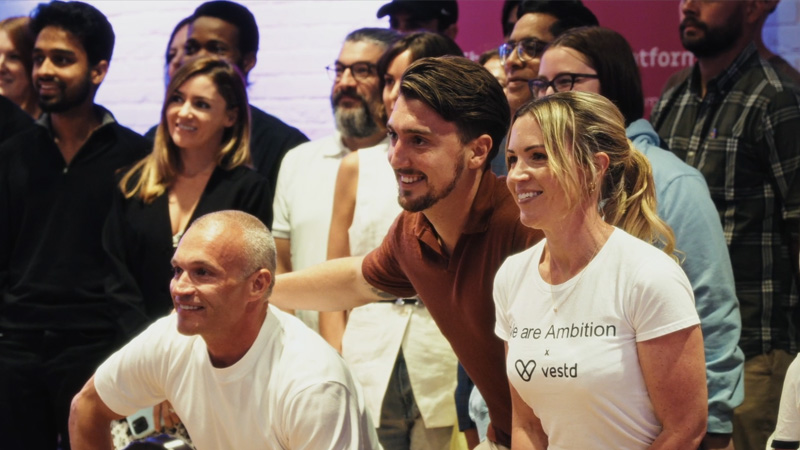
That gap between intention and action was exactly what 66 Days To Success set out to address. Our free accelerator programme, supported by incredible sponsors and founders, wasn't about fast-growth hacks or overnight wins.

It was about momentum - building it, sustaining it, and giving early-stage founders enough structure and belief to keep showing up for their business long after the programme ended.

Run across two cohorts last year, 66 Days To Success took its name from the idea that it takes roughly 66 days to form a habit. For founders, those habits are rarely glamorous.

There are things like sitting down regularly to work on the business rather than around it, getting comfortable talking about the business, asking better questions, and being willing to hear uncomfortable feedback.

How the programme came together

Vestd sponsored the first cohort of 66 Days To Success. The second went a step further, with Vestd becoming a co-organiser alongside HelpBnk, the founder-focused platform created by Simon Squibb.

With additional sponsors on board, the second programme grew in scale while remaining entirely free to attend.

That decision mattered. Removing the price barrier changed the room. Participants weren’t filtered by access to capital or existing networks, but by their willingness to commit.

What they shared was energy, curiosity and a desire to go all in on their business. For some, for the very first time.

Driving the programme from day one was Francesca Hodgson, an entrepreneur and coach with a strong track record of working with founders at pivotal moments.

On our side, Amber Nasir, Chris Nash, Guy Kaufman and Jack Baeza played key roles throughout, helping shape the programme and staying close to the founders as it unfolded. 

Their involvement reflected something that matters deeply to Vestd as a business: supporting growing businesses and helping them build ownership structures that work today, and grow with them.

Genuine value exchange

As opposed to a competitive structure with a cash pot at the end, we wanted to foster value that sticks with the whole cohort as their businesses develop.

Founders were given access to exclusive discounts, expert-led workshops, practical sessions and, crucially, rooms full of people they wouldn't usually meet, including investors.

Not on a stage, not behind closed doors, but across the table. Present, listening and asking questions. That mattered more than many participants expected.

For founders who had never spoken to an investor before, being able to observe how those conversations work - what gets challenged, what gets ignored, what sparks interest - removed a lot of fear. It turned something abstract into something human.

The sessions themselves focused on the realities of building a business:

How to articulate what you do without jargon; how to think about growth without chasing vanity metrics; how to prepare for future funding conversations, and more.

It was practical, occasionally uncomfortable, and deliberately grounded.

Igniting momentum in the real world

The most convincing proof of the programme's impact came after it ended. Participants didn't just leave with notebooks full of ideas. Many left with the momentum they could point to.

Jamarly Wright, founder of Plantain Papi, is a standout example. Following the programme, he appeared live on BBC One London, speaking about entrepreneurship and the realities of building a business from the ground up.

During the broadcast, he announced that Plantain Papi had secured a full residency at South Bank Market, trading every weekend throughout April.

Reflecting afterwards, Wright spoke candidly about the work behind moments like that. The long hours. The preparation. The fact that opportunities tend to arrive once you’re already moving, not before.

That kind of visibility doesn’t come from a single pitch or lucky break. It comes from confidence, clarity and repetition - all things 66 Days To Success was designed to encourage.

Other participants shared their own progress publicly. Fashion founders announcing early traction, hitting supermarket shelves, restocks and celebrity fans.

Some even stepped into TV and radio opportunities they may not have otherwise felt ready for. Not every story was headline-grabbing, and that’s part of the point. Success looked different for different founders.

For some, it was learning how to talk about their business without apologising. For others, it was finally committing to it full-time.

Momentum isn’t always loud, but it compounds.

Confidence without dependency

One of the strengths of 66 Days To Success was what it didn't create. There was no dependency on mentors or sponsors.

Founders weren't taught to wait for permission or validation. Instead, the programme focused on helping people trust their judgement and make better decisions with the information at hand. Supporting founders earlier in their journey helps set that foundation.

The collaboration with HelpBnk during the second cohort also showed what's possible when organisations stop competing for attention and start working together.

By combining HelpBnk's community reach with Vestd's experience supporting growing companies, the programme attracted a broad mix of founders. It all culminated in a demo day that felt accessible rather than intimidating.

It wasn’t about slick pitches or perfect numbers. It was about starting conversations. For many founders, simply being in the room with investors - seeing that they were people, not gatekeepers - changed how they thought about the future.

Why it matters

There’s no shortage of accelerator programmes promising scale, funding or rapid growth.

What 66 Days To Success offered instead was something simpler and, for many founders, more valuable: belief, structure and momentum.

By keeping the programme free, practical and people-led helped founders take themselves seriously at a stage when that can feel hardest.

For some founders, those 66 days were the beginning of something much bigger. For others, they were simply the moment things stopped feeling theoretical and started feeling real. Either way, momentum was built, and that’s often where everything changes.

Exit readiness part two: starting with the end in sight

Exit readiness part two: starting with the end in sight

Having considered triggers and drivers for your exit in Part One of my exit series, you might now be thinking about how to formulate your plan? Where...

Read More
How to test if your positioning really works

How to test if your positioning really works

Every startup founder thinks they have a clear, compelling story.

Read More
Responsible AI: what startups need to know

Responsible AI: what startups need to know

Last updated: 12 December 2023.

Read More