UK IN
Book a demo
Pricing

Guide

Equity Governance Guide & Checklist

What company secretaries and governance teams need to know to stay compliant and in control.


A practical overview of the key responsibilities involved in keeping accurate, compliant and audit-ready equity records. It covers cap tables, statutory registers, filings and returns, share issuances, share classes, valuations and more – with clear explanations of what to do, why and the risks.

Trusted by UK companies

Logo Stasher Logo Studio Graphene propel-tech-logo Logo Cuvva Logo Homeinstead Logo Properllernet Logo Mission Ventures Logo Opencast Ocean bottle - Dark logo - 3@300x easystorage-logo-fullcolor-2797 Logo Stasher Logo Studio Graphene propel-tech-logo Logo Cuvva Logo Homeinstead Logo Properllernet Logo Mission Ventures Logo Opencast Ocean bottle - Dark logo - 3@300x easystorage-logo-fullcolor-2797 Logo Stasher Logo Studio Graphene propel-tech-logo Logo Cuvva Logo Homeinstead Logo Properllernet Logo Mission Ventures Logo Opencast Ocean bottle - Dark logo - 3@300x easystorage-logo-fullcolor-2797

Why the legal team loves Vestd 

  • Fully synced two-way Companies House integration.
  • Real-time cap table and share register updates. 
  • FCA-regulated, secure, and always compliant.
  • Designed for compliant and secure governance and reporting.
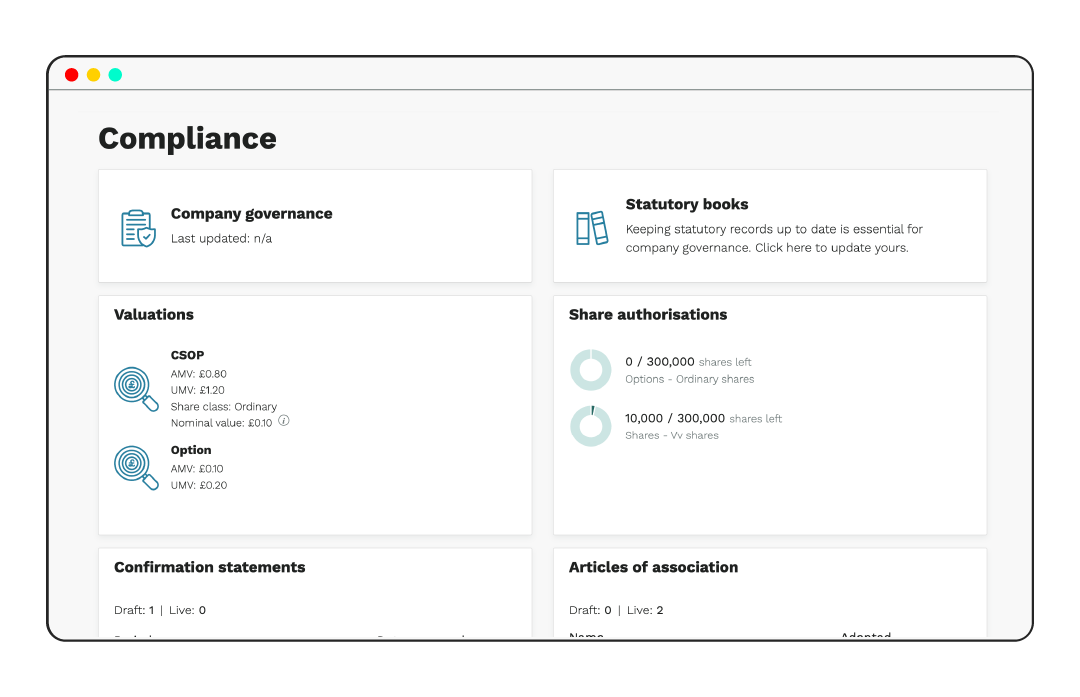
Compliance-1

It's easy to see how your cap table is made up and it takes away that worry that you might mistype something in an Excel sheet.

Naghza Alam

Financial Director at Orthoson

Frequently asked questions

What does equity governance actually involve?

Equity governance covers the processes and records that ensure a company’s share ownership, share schemes and statutory registers are accurate, compliant and auditable.

This includes maintaining the cap table, updating statutory registers, issuing shares correctly, managing share schemes, and keeping governance documentation accessible and up to date.

Who is the Equity Governance guide for?

The guide is designed for company secretaries, legal teams and finance leaders responsible for managing equity records, statutory compliance and share schemes in growing companies.

How do share schemes affect governance responsibilities?

Share schemes such as EMI or CSOP introduce additional compliance requirements, including HMRC notifications, valuations and documentation of option grants, vesting schedules and exercise terms.

Without proper governance processes, managing multiple schemes can quickly become complex. 

What needs to happen when new shares are issued?

Issuing shares requires formal authority and documentation. Directors must have the legal authority to allot shares, board resolutions must be recorded, and share certificates must be issued within two months.

Companies must also file the relevant forms with Companies House and update their registers accordingly. 

What filings are required to stay compliant?

Companies must submit confirmation statements annually and file updates to directors, shareholders, PSCs and share capital when changes occur.

Share allotments must be reported using the appropriate Companies House forms, and share schemes may require HMRC reporting.

Missing these deadlines can lead to penalties. Find out more on ERS reporting.